

While the world watches Walt Disney Studios expansion, Disney is quietly preparing something much bigger...
Watch the full video for a deeper dive into the permits, maps, and visual evidence, check out the complete video breakdown of this story:
Since opening in 1992, Disneyland Paris has held a hidden advantage: space. Lots of it. The resort was always designed to grow far beyond its initial footprint, with room for additional hotels, experiences, and even new theme parks. Today, enough land remains to nearly double the resort’s size, including the space reserved for a long-rumored third gate.
For many fans, a third Disneyland Paris theme park feels like a distant dream. But a closer look at recent infrastructure investments, contract obligations, and site preparations suggests this dream may be closer to reality than most realize.
The 1987 Convention: A 40-Year Framework
To understand today’s developments, we must start at the beginning. In 1987, Michael Eisner’s Walt Disney Company signed a groundbreaking convention with the French government, creating Euro Disney. This agreement gave Disney exclusive control over 2,000 hectares of farmland east of Paris and established a framework that remains active nearly 40 years later.
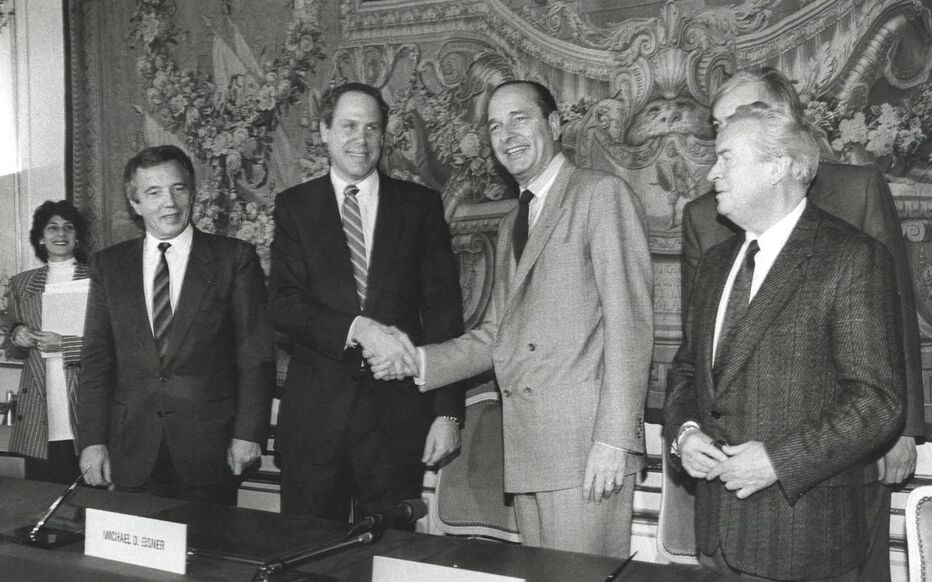
The convention outlined clear obligations for both parties:
The French State committed to:
- Major infrastructure: extending motorways, building the RER line, constructing Marne-la-Vallée – Chessy station, and adding TGV connections
- Land and zoning: making nearly 20 km² available with guaranteed urban planning permissions
- Economic support: helping develop Val d’Europe, the rapidly growing region surrounding the resort
Disney committed to:
- Building at least one theme park by 1992
- Developing hotels and the Disney Village entertainment complex
- Massive private investment creating thousands of jobs
- Partnering in Val d’Europe’s development
- Respecting French culture while preserving green spaces
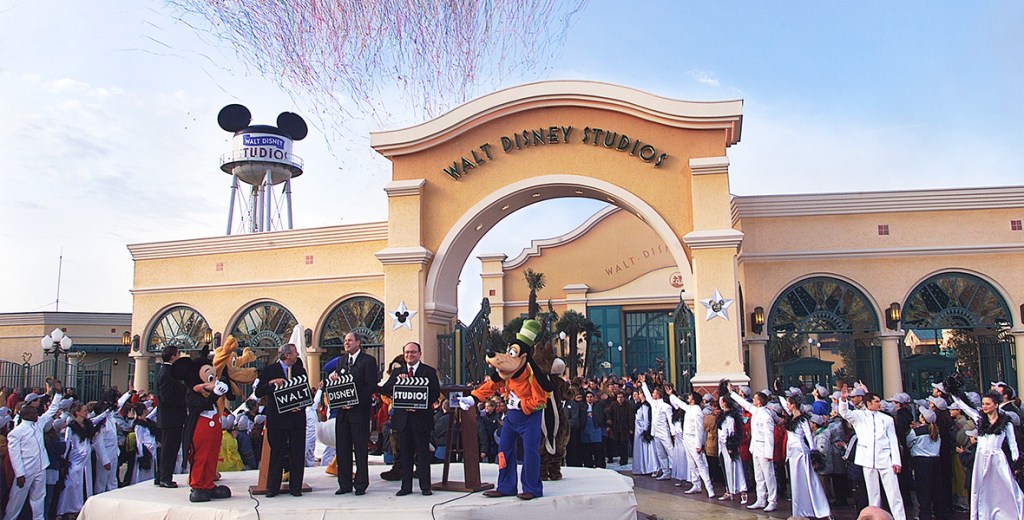
Crucially, the development was divided into phases. Phase 2 required a second park by 2007 a deadline that resulted in Walt Disney Studios Park opening in 2002. Phase 3? That’s where things get interesting.
The 2036/2040 Deadlines: Use It or Lose It
Following multiple amendments over the decades, including one in 2010 that reportedly set a 2026 deadline, Disney renegotiated again in 2020 after taking full ownership of Euro Disney and pledging a €2 billion investment. According to French news outlet Le Parisien, this latest amendment establishes critical deadlines for a potential third park.
The current framework works as follows:
By March 24, 2036, Disney must submit detailed plans for a third theme park. If they don’t, the reserved land reverts to the French state, which can then sell it to other parties. It’s a “use it or lose it” clause designed to prevent Disney from indefinitely holding valuable land.
There’s an additional performance-based trigger: if Disneyland Paris reaches 22 million annual visitors, Disney becomes obligated to submit plans by March 23, 2040. However, 2036 remains the critical date, missing it means losing the land regardless of attendance figures.
The scenarios:
- If Disney never hits 22M but misses the 2036 deadline: land reverts to the state
- If Disney hits 22M before 2036: must submit plans, keeps land control
- If Disney hits 22M after 2036 but before 2040: may be too late, land already gone
- If 22M is never reached by 2040: obligation ends, opportunity disappears
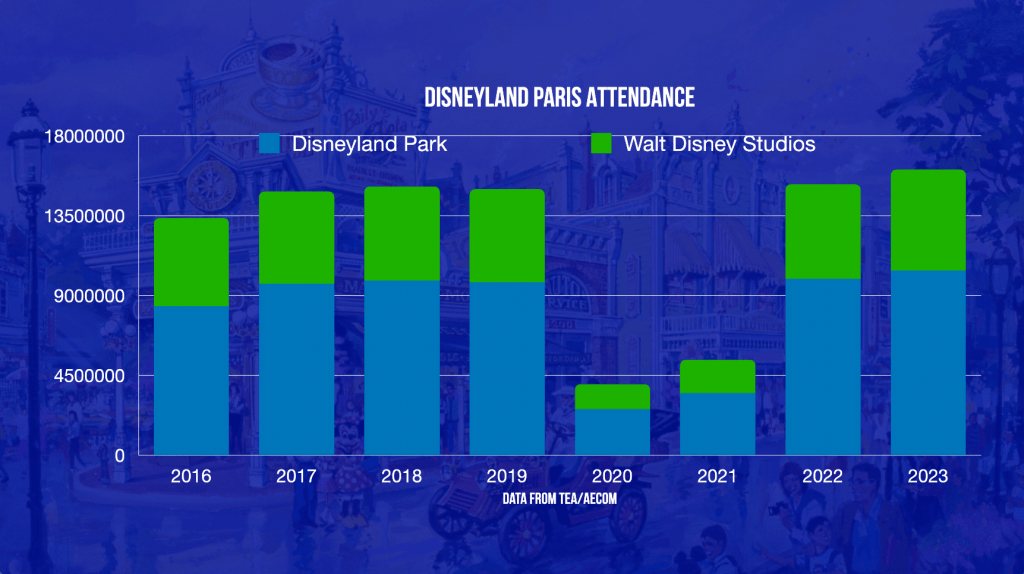
Currently, Disneyland Paris attracts approximately 16 million visitors annually. With the massive Studios expansion opening soon, reaching 22 million by the early 2030s is entirely plausible. Disney has a unique counting method, where only the first scan of a ticket counts. So if you visit both parks in a day, you count as one guest to whatever park you first entered. This means that longer stays from the expanded Studios could significantly boost these numbers even without attracting entirely new visitors.
What Disney Says (and Doesn’t Say)
In an April 2025 interview with Le Point, Disneyland Paris President Natacha Rafalski was asked directly about the third park. Her response was diplomatically optimistic:
“We are always working on the long-term planning and development of the destination. It is a constant topic for us. Quite honestly, we have nothing to announce at this time. But rest assured: we are always thinking about our future. Theme parks are, by their very nature, always destined to be developed and that is something we enjoy working on.”
It’s a classic executive non-answer that reveals nothing while confirming everything: the third park remains under active consideration.
But actions speak louder than words. And Disney’s recent actions are revealing.
The Evidence: Millions in Infrastructure Investments
The Berms: 2 Kilometers of Landscaping
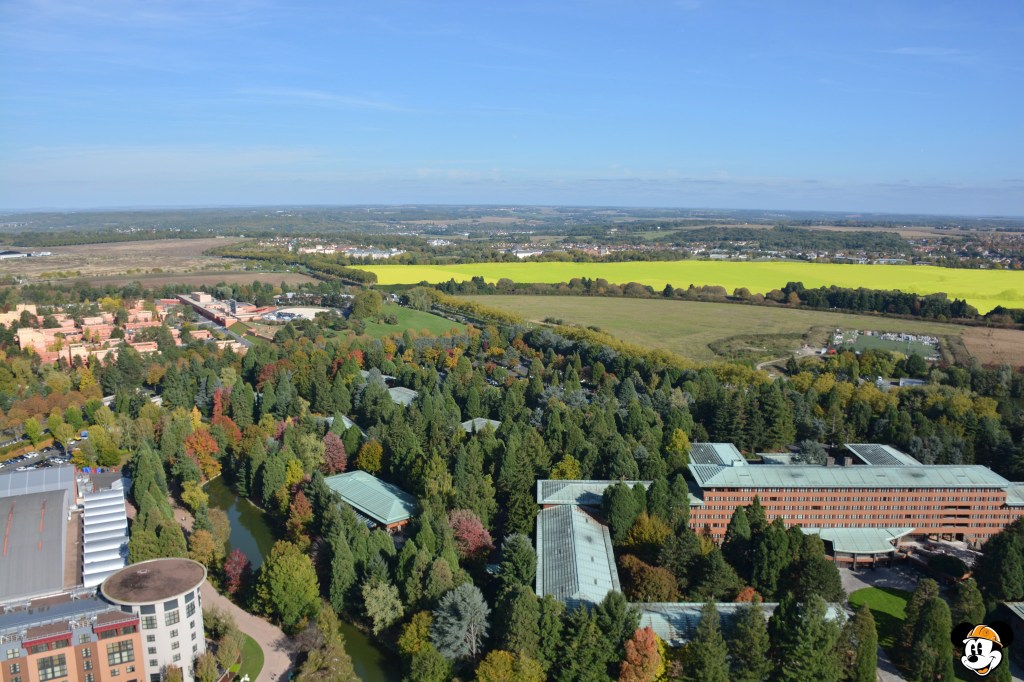
Since 2021, Disney has been constructing earthwork berms around the massive plot reserved for the third park. Over a kilometer runs along the northern side, another 500 meters on the southern side near the motorway, plus additional segments on a smaller northern plot, nearly 2 kilometers total.
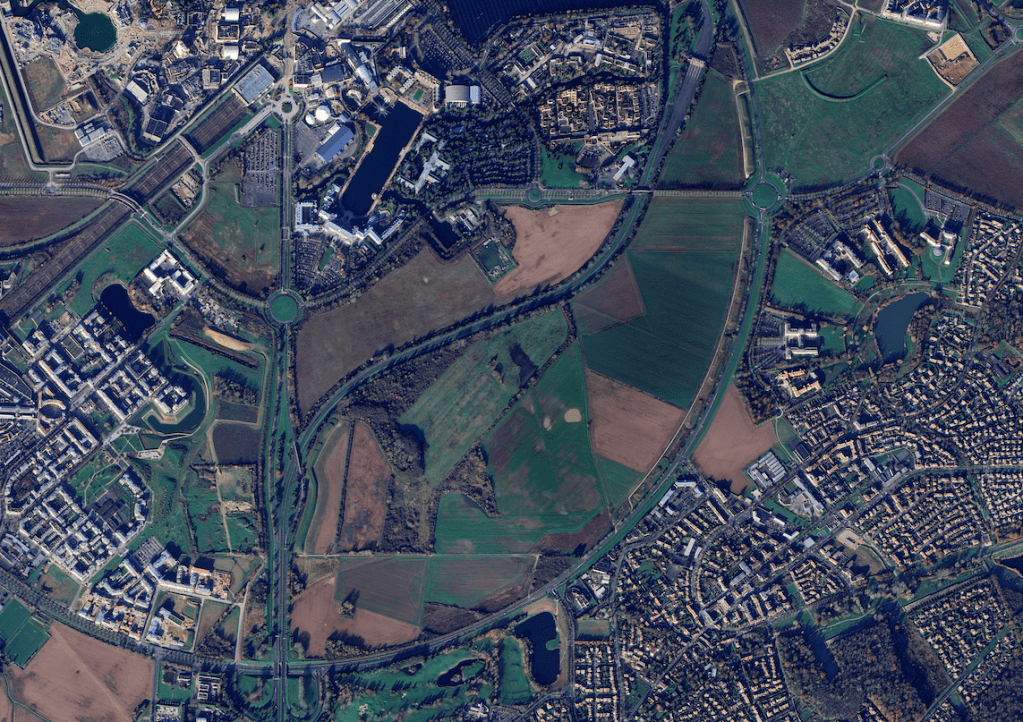
For context, the berm separating Disney Adventure World from the town of Serris is just under 500 meters. These new berms currently “exist for nothing”, unless you understand that berms are long-term landscaping infrastructure. Disney builds them to define park boundaries, create sound barriers, and separate guest areas from backstage zones. You don’t build in 2 kilometers of berms unless you’re planning something substantial.
The Roads: €27 Million in Expanded Access
Last year, EpaFrance unveiled plans to dramatically upgrade roadways in and around the resort. The project will double capacity in many areas, create dedicated bus lanes, improve pedestrian traffic, and reconfigure several key intersections.
New bridges will span the Boulevard du Parc (the main entrance to parking lots) and the Marina near Disney’s Sequoia Lodge. The improvements run almost entirely around the third park’s designated plot, better connecting the towns of Serris and Coupvray while improving access to Disney hotels, non-Disney hotels, and, notably, the third gate area.
Construction is to begin this year with an estimated €27 million price tag, co-funded by Disney. While the exact split isn’t public, Disney is clearly paying a substantial portion.
The Substation: €40+ Million in Dedicated Power
The most significant investment concerns something most guests never think about: electricity.
Currently, the resort shares power from two substations that also supply surrounding towns, businesses, hotels, trains, and residences. This shared infrastructure makes major expansion complicated. Earlier this year, Disney filed permits for a brand-new electrical substation exclusively for Disneyland Paris.
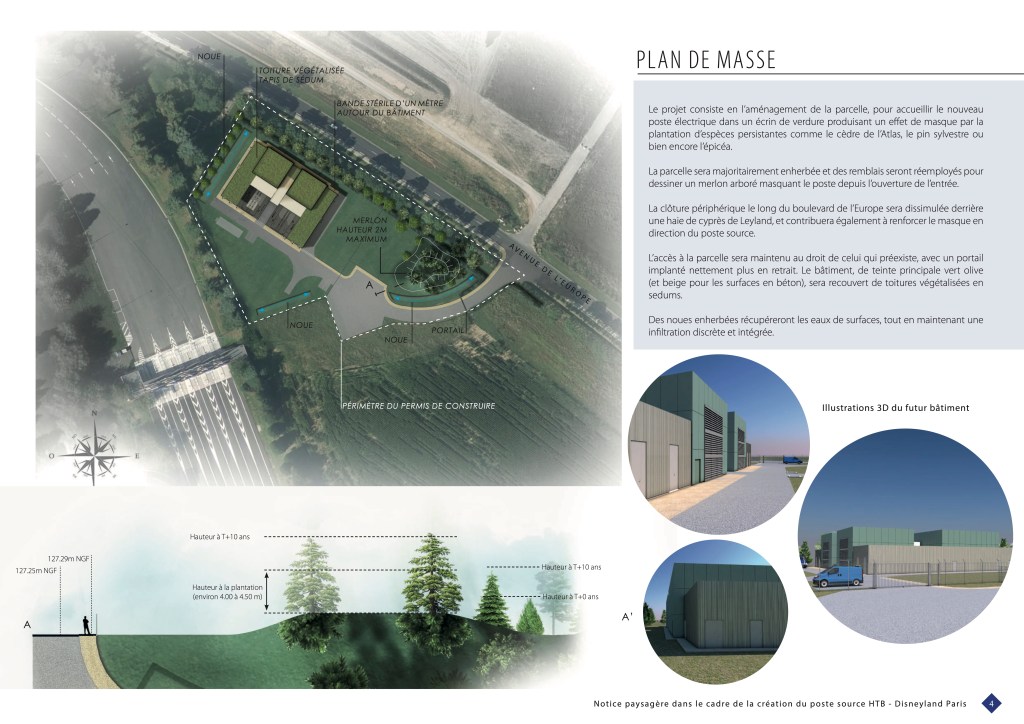
The numbers are staggering. According to analysis of the resort’s peak demand, this new substation could provide two to three times current peak capacity, enough to power a resort nearly three times its current size. Per permit documentation analysis by DLP Rescue Rangers, it could support the existing resort plus one additional park and six more hotels. In simpler terms: three parks, twelve hotels, and extensive backstage facilities.
Disney appears to be funding this entirely themselves, with my estimates ranging from €40-50 million based on construction permits.

Perhaps most tellingly, the substation’s location sits just north of the third park plot, positioned perfectly between the current resort and the supposed future expansion area, right next to the parking entrance.
The Investment That Reveals Intent
Let’s total the evidence:
- Berms: Ongoing since 2021
- Roads: €27 million (significant Disney co-funding)
- Substation: €40-50 million (apparently fully Disney-funded)
Total: Approximately €70+ million in shared costs for infrastructure concentrated around the third park site.
Could all this be justified by expansions to the existing resort? Partially, yes. Disney is entering a new era of investment at Disneyland Paris. Disney Adventure World opens next year, followed by additional announced expansions. New hotels are likely and infrastructure is certainly needed.
But the scale tells a different story. You don’t build a substation with triple your current capacity just for incremental expansion. You don’t invest millions in infrastructure around one specific empty plot for projects “decades away.” You don’t construct 2 kilometers of berms defining boundaries for a park that will never be built.
Not Guaranteed, But Increasingly Likely
The third Disneyland Paris theme park isn’t certain. Contract amendments are always possible. Market conditions could change. Disney’s strategic priorities might shift.
But the evidence is clear: Disney is spending tens of millions of euros preparing for something significant. They’re building infrastructure that only makes sense if a major expansion, specifically, a third park, is on the horizon.
The berms are being landscaped. The roads are being doubled. The dedicated substation is under construction. All of it concentrated around one plot of land, all completing by 2027-2028, all positioned perfectly for a decision that must be made by 2036.
Natacha Rafalski says Disney has “nothing to announce.” But as she also noted, theme parks are “by their very nature, always destined to be developed.” Disney may not be announcing anything yet. But they’re certainly building for something.
And that something increasingly looks like a third gate.
 The Main Street News